Sailing in Florida
Webmaster
All photos by Donna Sue Marks
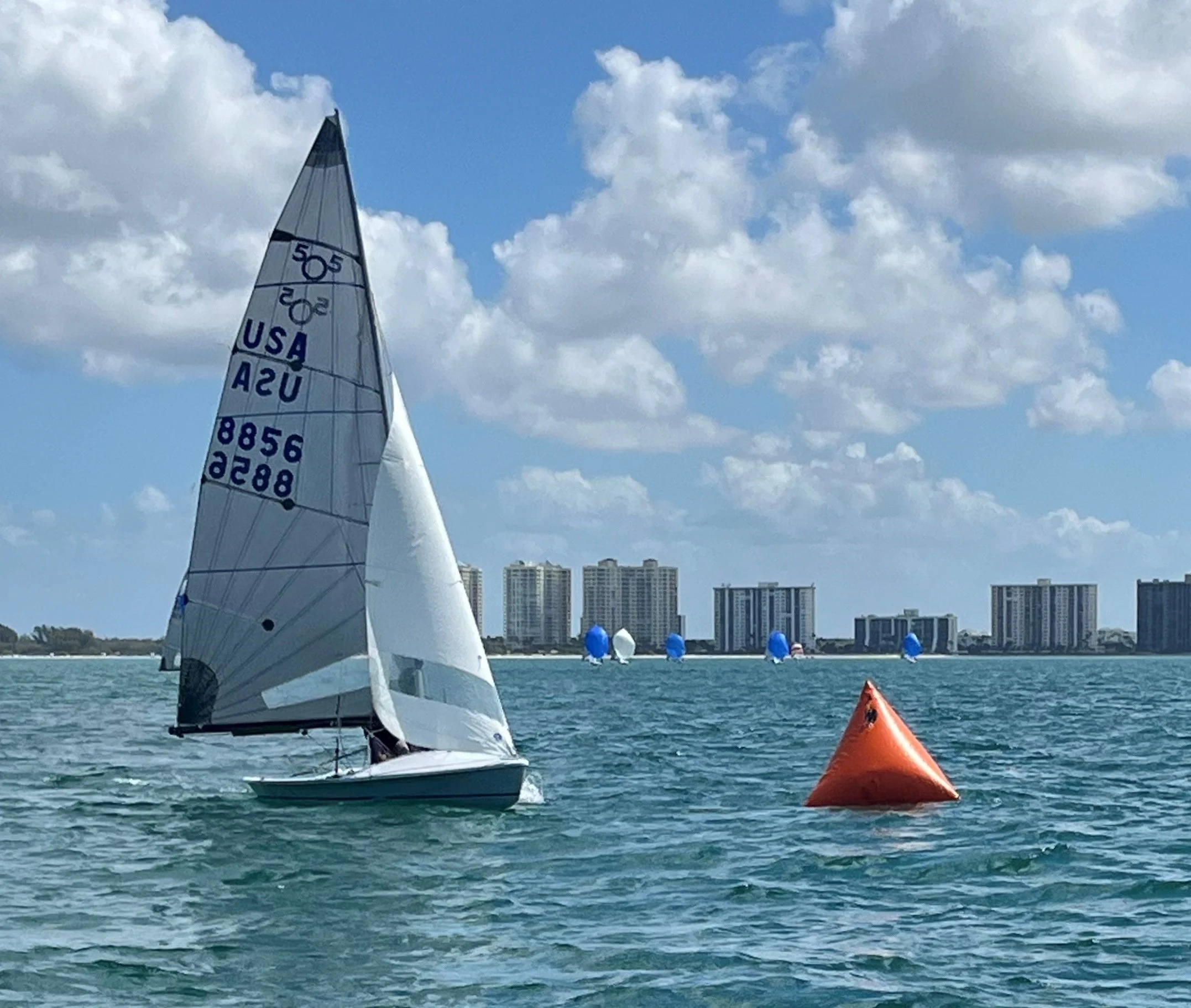
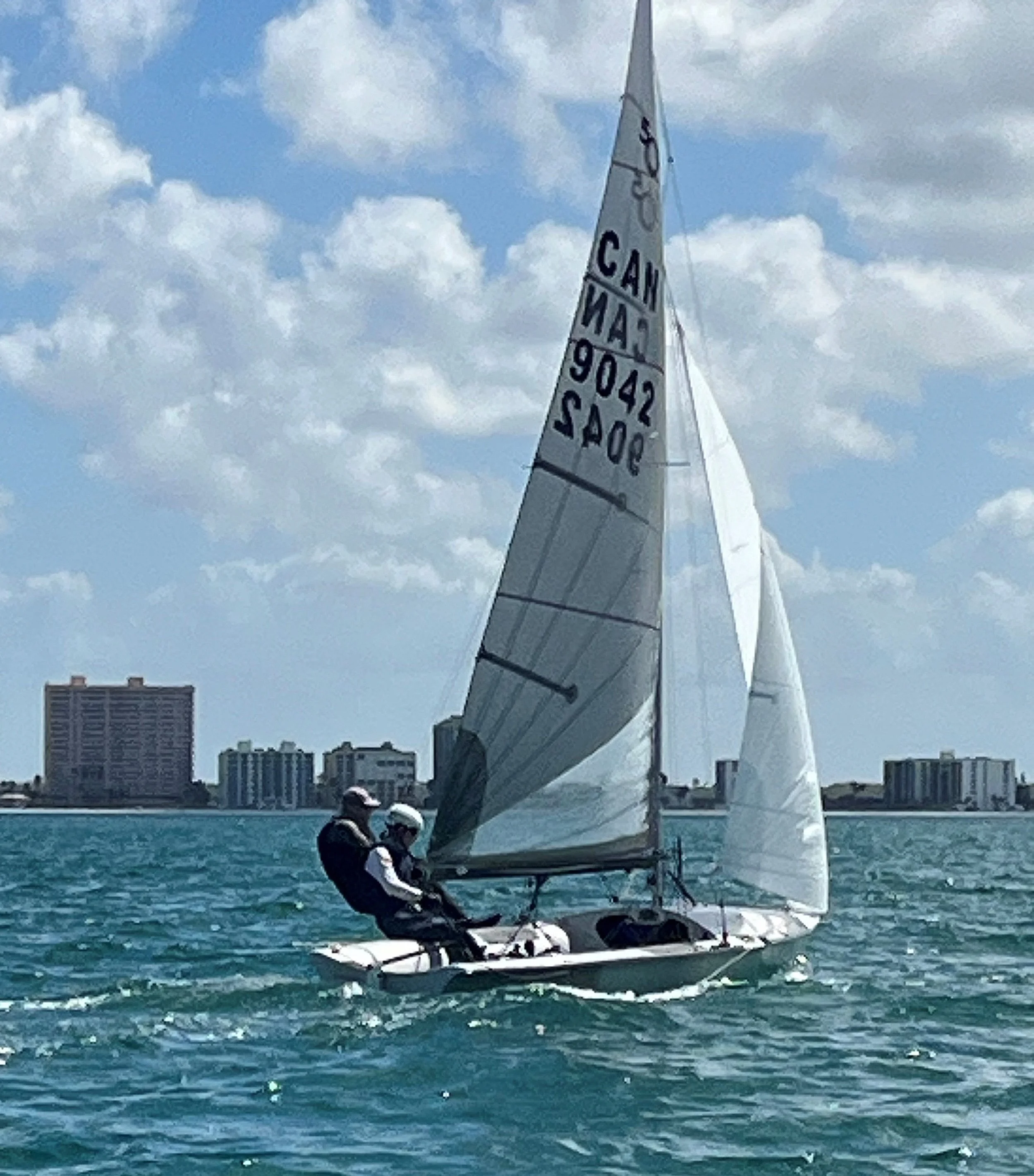
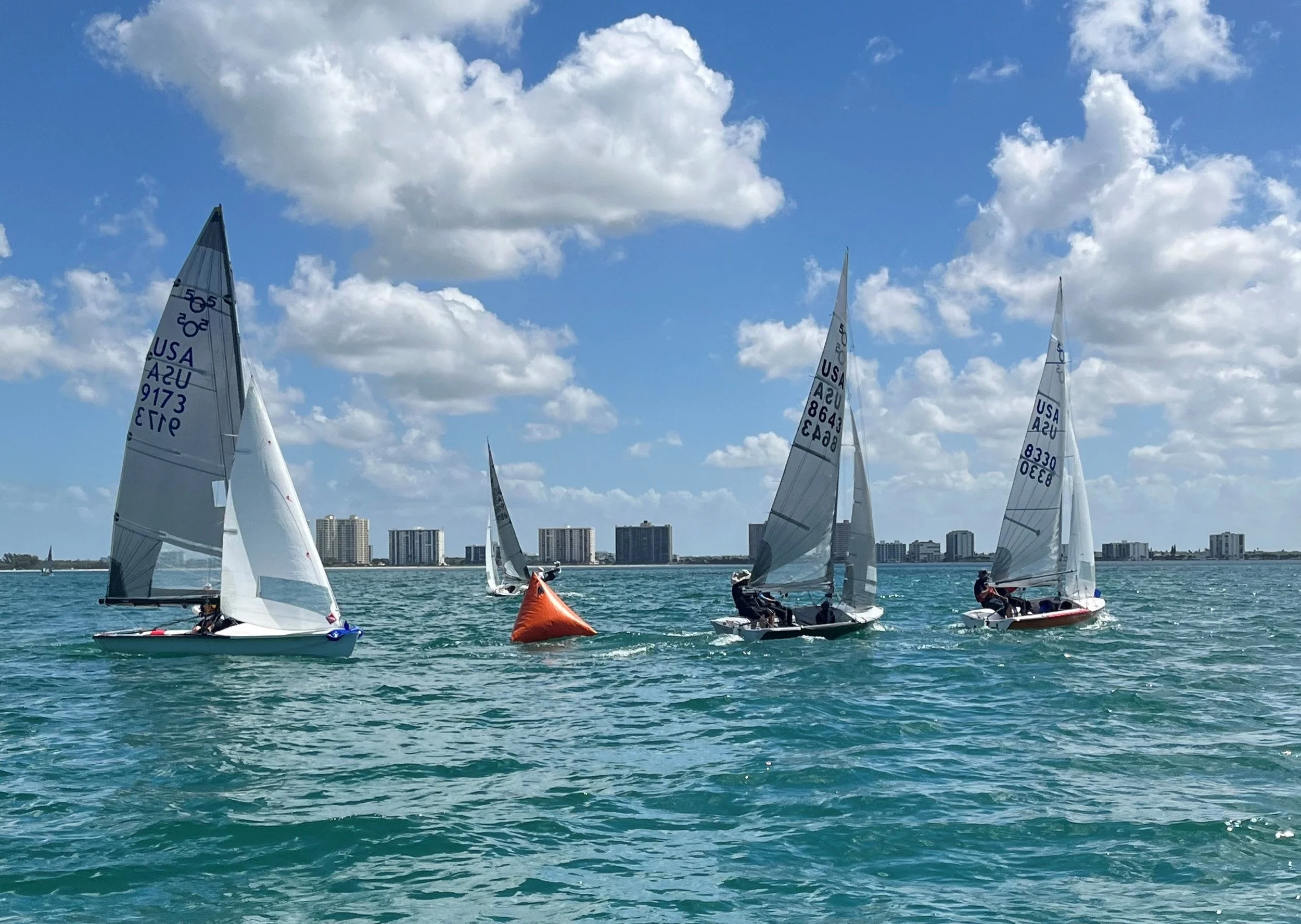
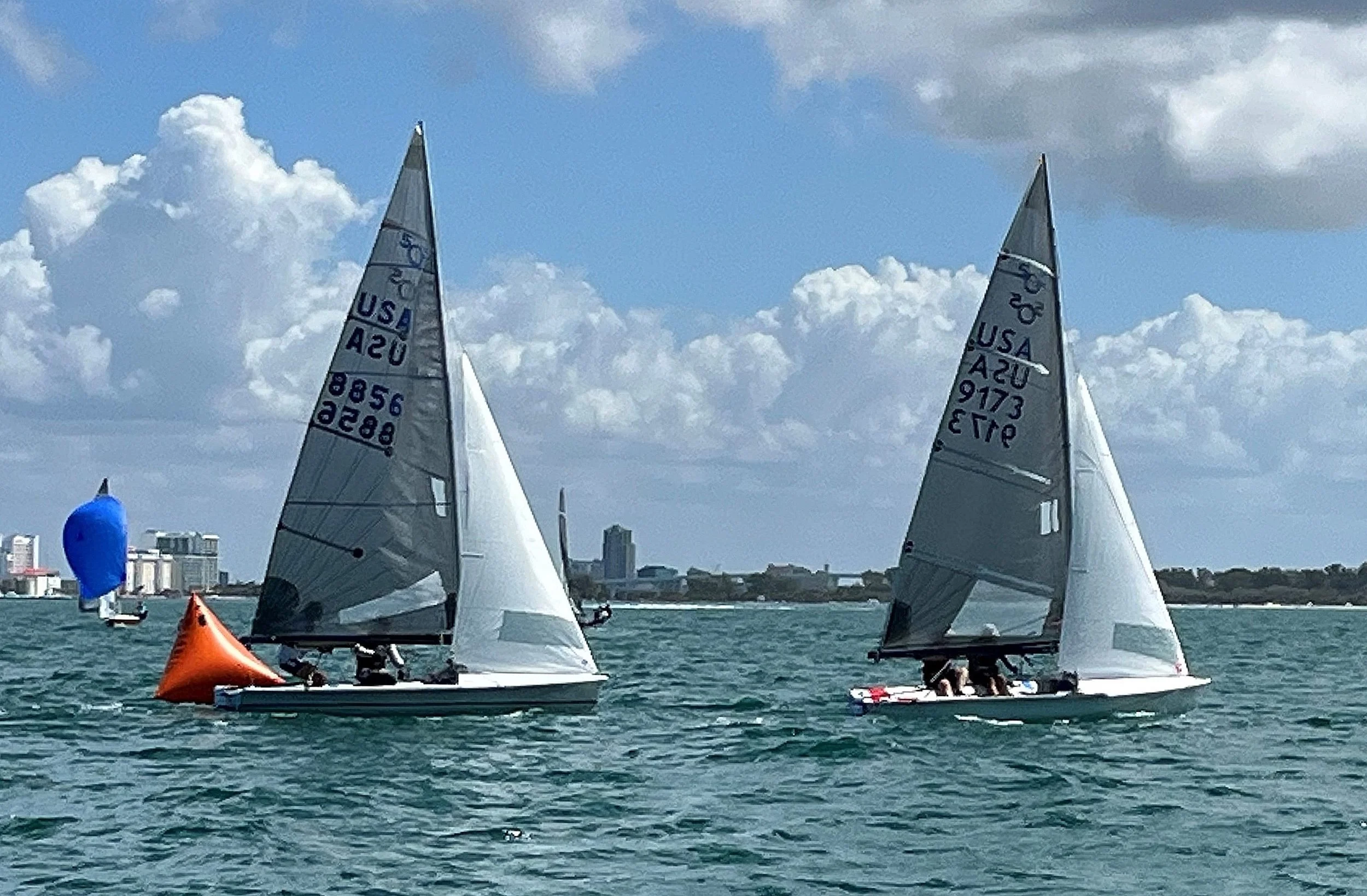
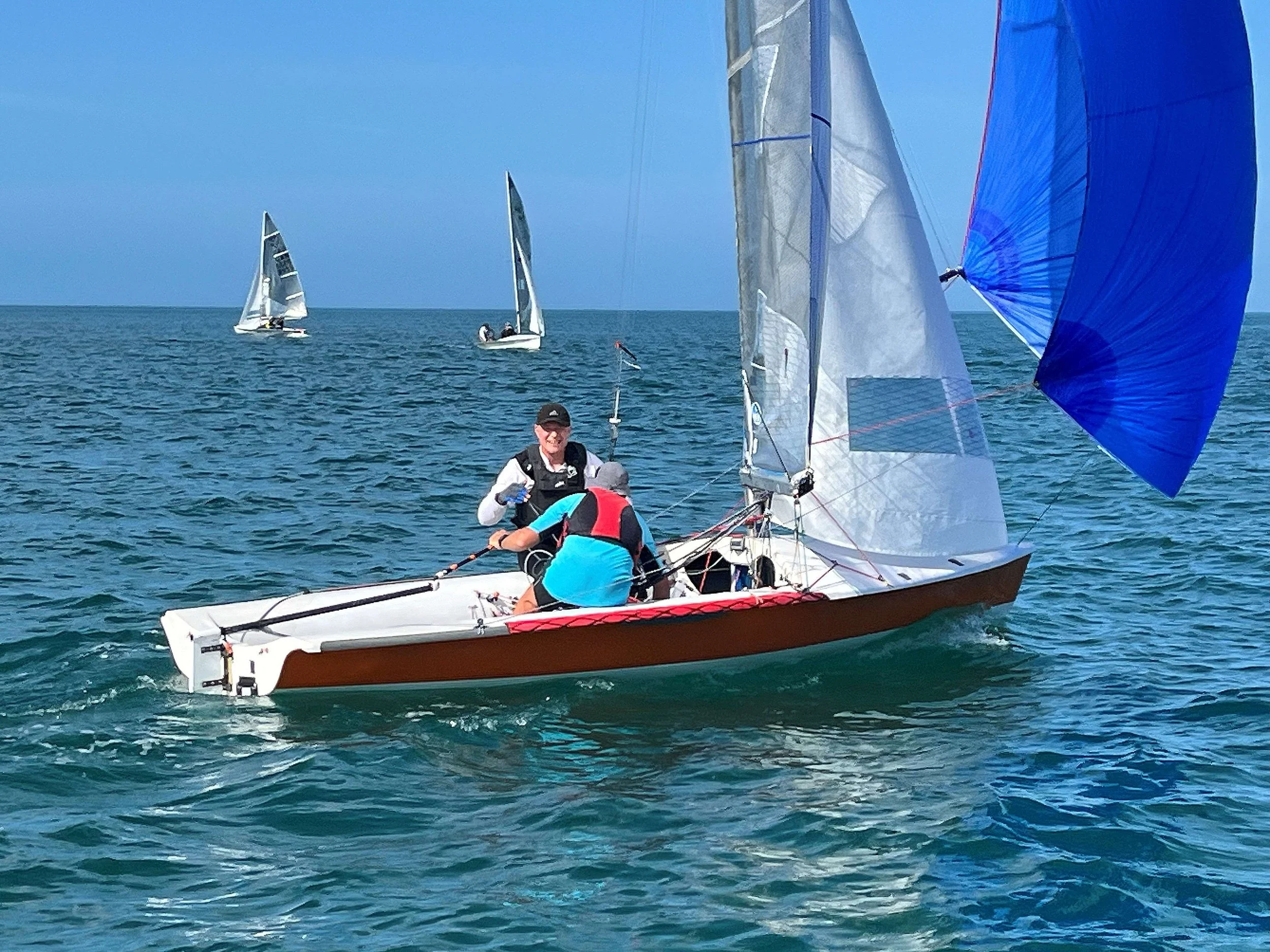
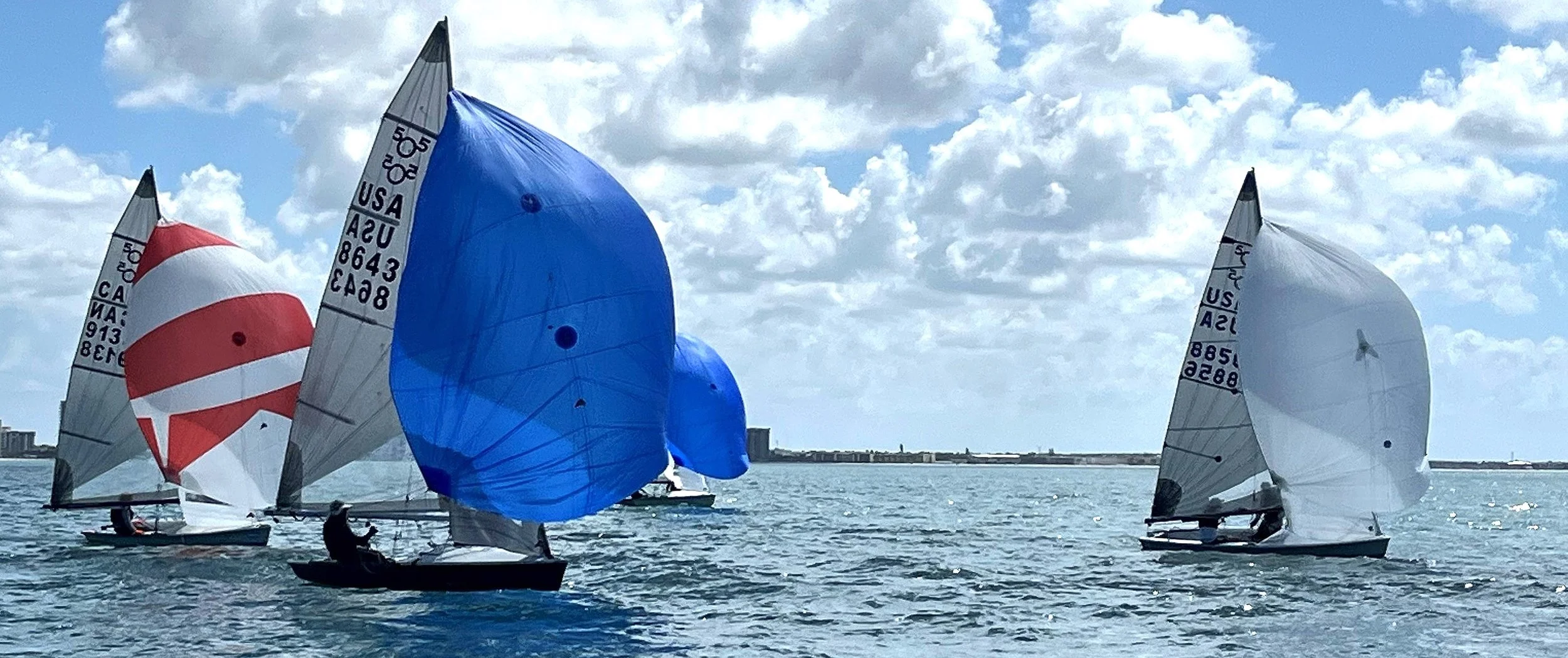
A couple of weeks ago, I had the opportunity to steer an International 505 at the 2026 Midwinters Championship in Clearwater, Florida as well as a follow-up “friendly” dinghy regatta at Davis Island in nearby Tampa Bay. As there was no racing last Saturday, I thought I might share that experience in this week’s newsletter.
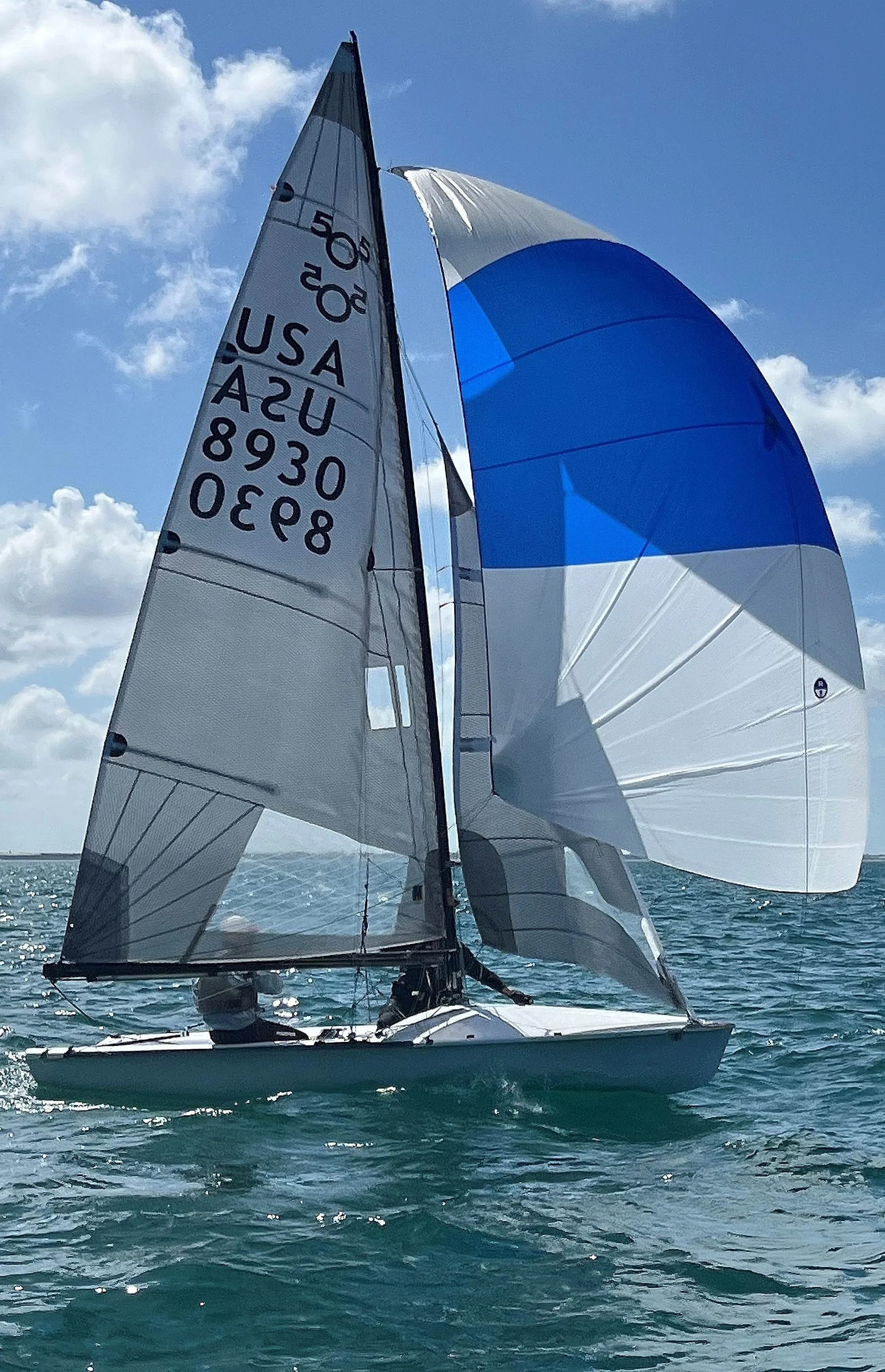
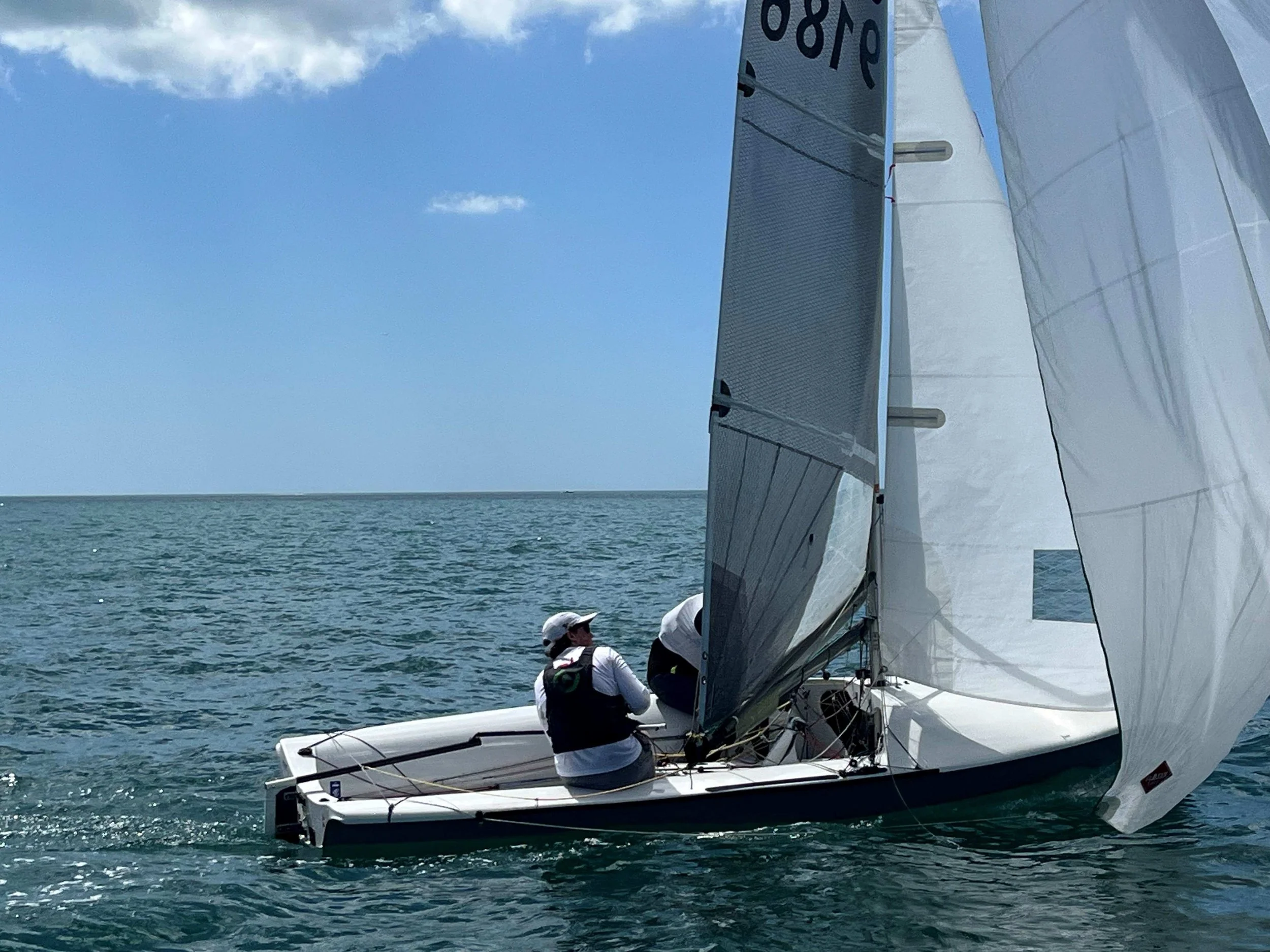
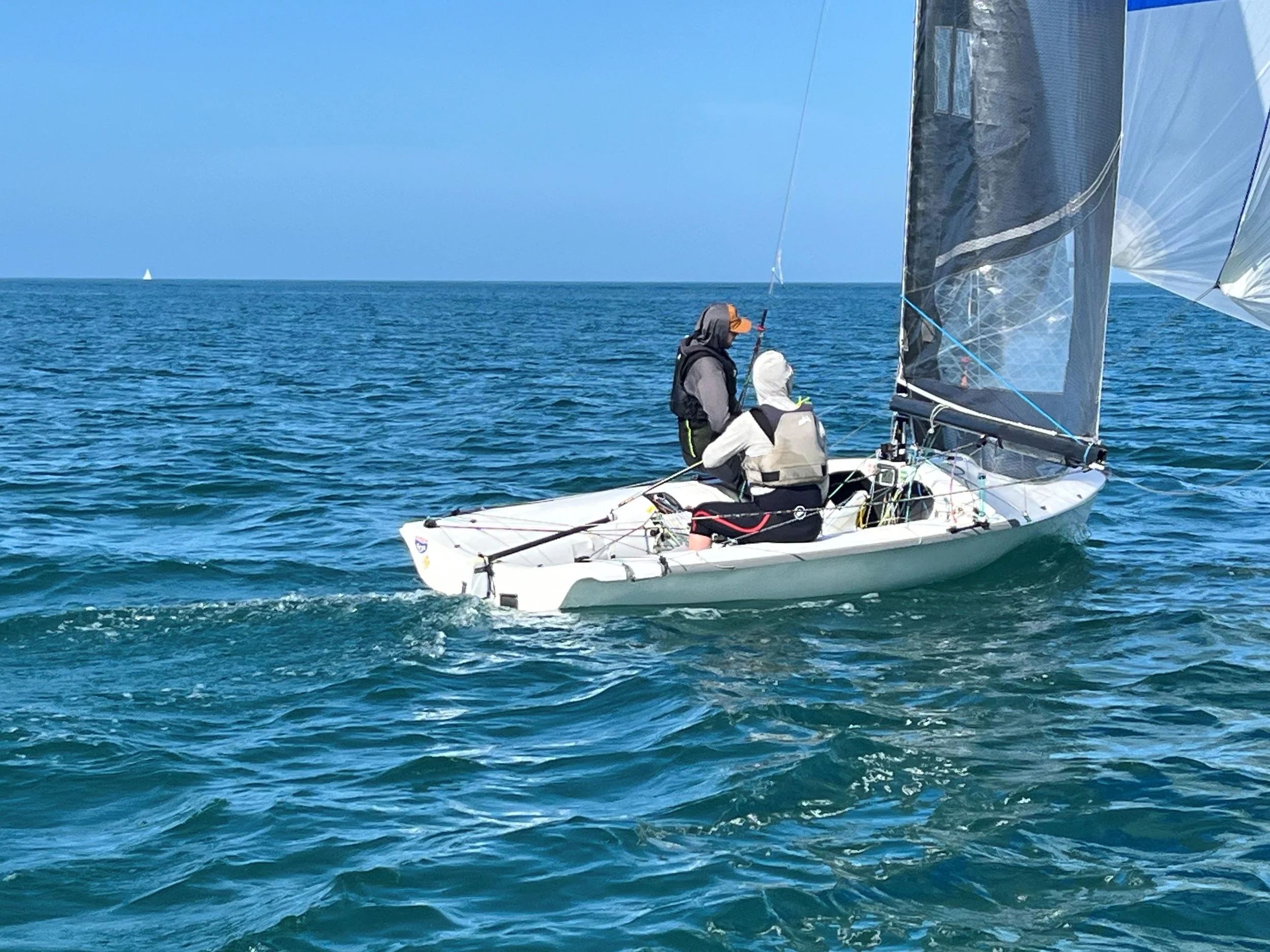
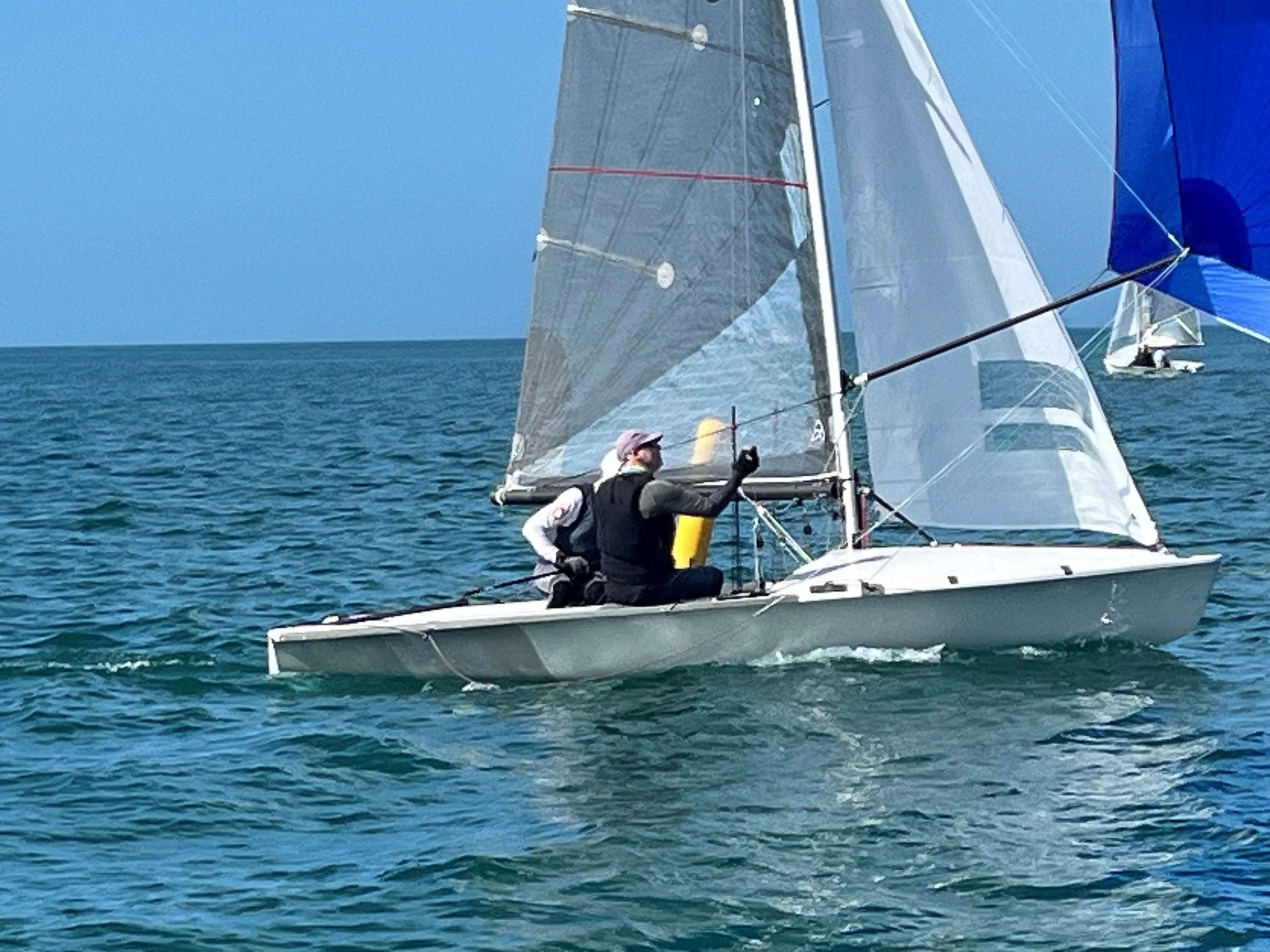
The 505 is a classic racing dinghy that has been around since the 1950’s. Technically a one-design, it is nonetheless a “development class” that has been updated regularly to keep pace with emerging technologies. Top boats now sport full carbon hulls (wet-laid or prepreg), carbon booms and twin spinnaker poles. The large symmetrical spinnaker (it was greatly enlarged in the late 90’s to “enliven” the class) means that in anything over about 10-knots of breeze it is sailed as a skiff: off-wind wire running providing a superior VMG. Every boat is rigged slightly differently as the “5-Oh” is definitely a tinkerer’s boat. Pretty much everything is adjustable up to and including the angle of attack of the centreboard, which makes for a lot of lines in the boat. In short, a big change from the Laser.
Back to the experience. I drove from Toronto to Clearwater with my crew (and boat owner), departing in minus 15-deg snow and arriving 26 hours later in 28-deg sunshine. The Clearwater Community Sailing Center is located on a barrier island on the gulf coast, with racing taking place on the Gulf of Mexico. The water here was slightly cooler than Sydney Harbour is at present (this was mid-winter after all), but the winds were generally light as the morning gradient-generated easterly fought a building sea breeze. In terms of numbers, these were down from last year due to several factors. In all nine boats from the US east coast and Canada attended, but the quality of the racing was very high. The winds were generally light (6-10 knots) and we sailed 12 races over three days. Ethan Bixby, former owner of North Sails St. Petersburg and legendary East Coast dinghy sailor, was the winner, tying on points with Craig Thompson (Thompson Boat Works) but taking the top prize on count-back. We finished 5th.
What a fabulous boat to sail. The 505 is perfectly balanced upwind, only requiring finger-tip pressures to steer even in big breeze. Hiking is comfortable, certainly compared with a Laser, plus, well, that’s what the crew’s for. High upwind speeds (planes in 8-knots and above) and high aspect foils means you get a lot of lift from the centreboard. Optimum VMG is obtained by dropping the bow a bit and letting the boatspeed build, which in turn lifts the boat to weather. As I found out, you don’t always get the freedom to do that, especially off the start as you squeeze up to hold your lane. Speaking of which, 505’s generally use gate (“rabbit”) starts and doing this well is, let’s say, a skill I am yet to acquire. I tried the Laser start technique where you park up just off the [imaginary] line, then sheet in and accelerate with about 8 seconds to go. Doesn’t work. You can’t “manhandle” a 505 the way you can a Laser, as the high-aspect rudder simple does not scull. You have to do a proper approach, which requires advanced calculus to account for the rabbit’s speed, timing and anticipated heading, not to mention the other boats trying to do the same.
Off wind, in breeze, is a blast. If you can keep the crew on the wire and hold the boat about 45-degrees off DDW then you will make gains. Any less breeze and you need to square the spinnaker and sail more-or-less like a Laser (minus the S-turns). The more the breeze, the deeper the angle you can sail while still wire-running. Gybing is easy with twin poles as you basically trip the old pole, which retracts onto the boom (hopefully without harpooning the helmsman), then after the main comes over you launch the new pole. The brace/guy is always attached (not completely sure how this works, but that’s the crew’s department). Biggest problem I had was when moving fast in bigger breeze the rudder is so sensitive that my gybes were too quick. That’s how I discovered the water temperature!
At the end of each day there was a debrief around the beer cooler. Technical discussions and Q&A about what worked and what didn’t in terms of breeze strength and shifts and also boat set-up. The 505 sailors are all very good about sharing ideas and helping each other get faster. Kinda like sailors at DBSC!
- Chris Tattersall, Newsletter Editor